Help your teen strengthen their friendships
- Last updated: 28 January 2026
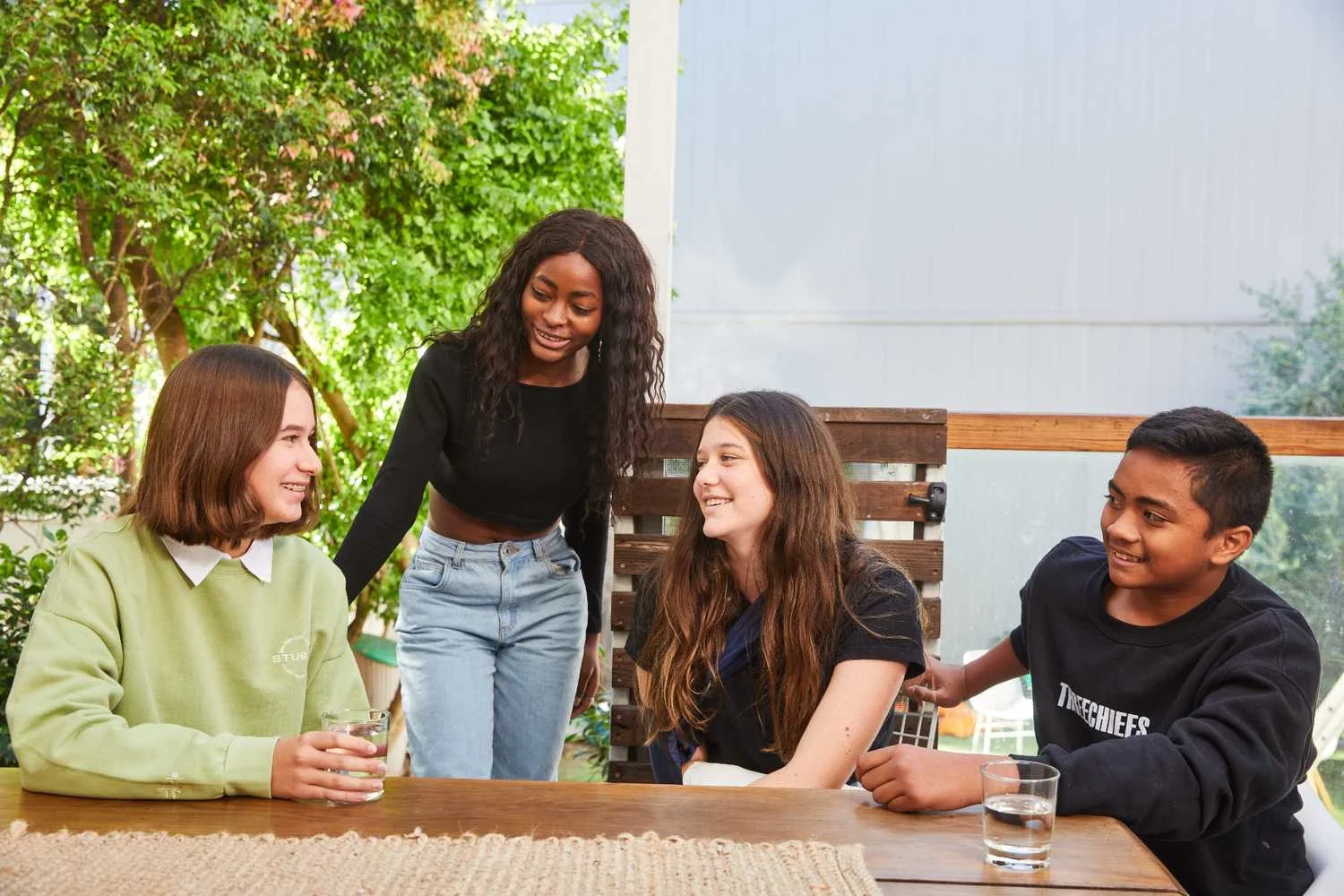
Friendships play an incredibly important role in the life of a teen. While you’re their ‘home base’ for learning about values, their friends are the ones who’ll introduce them to new perspectives and ways of doing things.
Quality friendships don't just provide a support network outside the family; they're a safe space for your teen to practise being vulnerable, handle conflict and drama, and show empathy – the building blocks they’ll need for all their future relationships.
Here's how you can guide your teen in building those foundational skills and fostering deeper, more sustainable friendships.
Define what a good friendship looks like
It can be really helpful to give your teen a strong idea of what a healthy friendship actually feels like. Encourage them to gravitate towards people who:
make them feel relaxed and able to be themselves
listen to them without judging
support and respect them
don’t pressure them, blame them or make them feel anxious.
When you see their peers doing something positive, point it out to your teen and explain why you admire this behaviour.
Work on growing their emotional intelligence
Friends can grow apart for any number of reasons. One reason could be that your teen might have trouble recognising their own feelings or seeing things from their friend’s point of view. Here are some ways you can encourage emotional intelligence in your teen:
If they’re feeling down about a particular friendship, help them to find a better way of dealing with it than just saying, ‘I'm fine’ or ‘It sucks.’ Maybe they’re 'frustrated' or 'disappointed' or 'overwhelmed'. Naming the feeling will help them to understand what they can do next.
If a friend bails on plans or disappoints your teen, ask them to consider what might be going on in their friend’s life that made them act that way. This shifts the focus from resenting the behaviour to being curious about what might have caused it.
If they know they’ve messed up and have hurt a friend, teach them how to own what they did wrong and to apologise for it: ‘I’m sorry I shared that secret. I know I broke your trust, and I want to make it up to you.’
Empower them to navigate changes in their friendships
Teen friendships naturally evolve over time, and sometimes this can be painful to deal with. If they’re missing a friend they’ve lost touch with, encourage them to reach out to the person and suggest a low-stakes hangout. They could say something like, ‘Hey, we haven't talked in a bit. I miss hanging out. Want to grab lunch tomorrow?’
Sometimes, a friendship has just run its course, which can make your teen feel angry, confused, hurt, jealous or disappointed. Remind them that it isn’t a failure on their part or a reflection of their worth – it’s just part of growing up. Over on our Youth site, we have some tips for making it through a mate breakup that you could share with your teen if they’re having a hard time.
Teach them how to approach conflict in a constructive way
Surface-level friends may avoid conflict or cut communication, but real friends will work through a conflict and use it as an opportunity to build trust. Here are some ways you can help your teen to grow their conflict resolution skills:
Encourage them to establish a cooling-off period before they confront a friend, so that they can sit with their initial reaction until they’re feeling calmer before responding.
Teach them to use ‘I’ statements so that their friend doesn’t feel like they’re being ganged up on. Instead of saying, ‘You always ignore me’, they can try, ‘I feel a bit sidelined when we’re in a big group.’
Remind them that a true friend will tell them the hard truth, because they care. They won't pressure your teen, but they also won't always agree with them.
Support their way of socialising
Not every teen likes big groups, and that’s okay. If they like one-on-one chats, encourage them to ask a friend to go for a coffee or a walk. If they open up more while doing something active, suggest they invite a friend to go bike riding or hiking, or to kick a footy around.
If your teen finds opening up to others easier online, then forums and gaming can be a great place for them to build their confidence, as long as you check in with them regularly to make sure they’re safe. Learn more about understanding teens’ online friendships.
Model positive friendships
Show your teen how you put effort into maintaining your own friendships. This could look like:
talking about ways you and your friends have supported each other
letting your teen see you reach out to a friend who’s struggling, or apologising when you’ve dropped the ball
bringing your teen along to activities with your friends, like parties, backyard barbecues or picnics in the park.
Above all, it’s important to trust your teen to develop good judgement through their own experiences, while making sure they know you’re there for them if they need to bounce anything off you.
Did you find what you needed?
No - Access free, professional support from ReachOut Parents One-on-One Support.
I need to know more - Read our fact sheet on peer pressure.