How to talk about abuse in your home
- Last updated: 06 May 2025
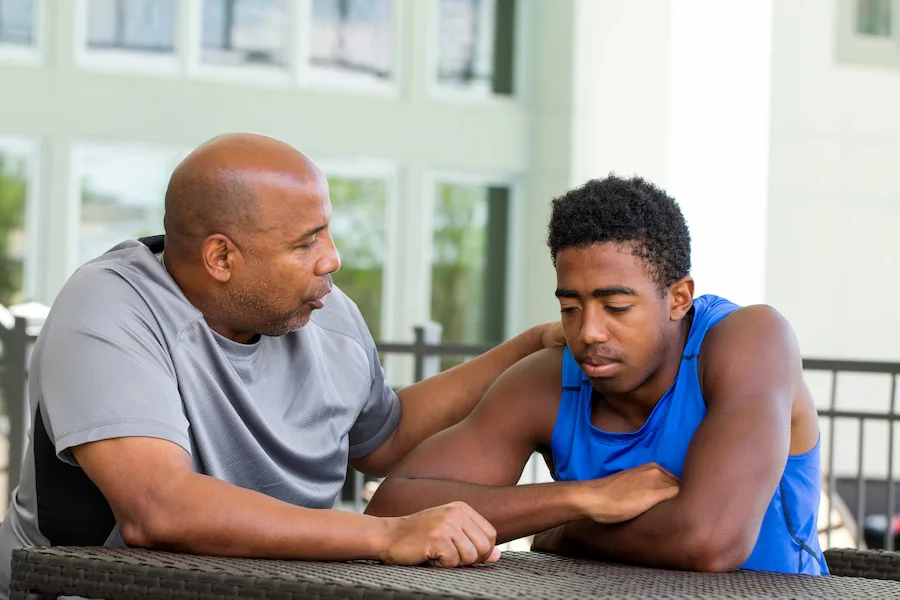
Open conversations are important if abuse is happening in your home and you have teenagers in your care. Giving teenagers a chance to hear from you and speak about their feelings can be very healing.
Why should I talk to my teenager about domestic violence?
Even if they don’t witness the abuse directly, everyone in your home will be very aware that something isn't right. Ignoring the issue can leave a young person feeling more anxious and confused.
Talking about abuse with teenagers lets them know that they don't need to remain quiet or keep secrets if anyone hurts them. This can break the cycle of abuse and help them understand their right to safety and respect in their relationships.
How do I start a conversation about abuse at home?
Starting this conversation can feel daunting. These conversations aren't ones we ever expect to have, so it’s only natural to feel nervous and uncomfortable about beginning to speak about abuse. In the tips below, we’ve provided some scripts you can use or practise out loud if it helps you feel more comfortable.
Find a private time and place where you’re unlikely to be interrupted.
Start gently with something like: 'I was hoping to talk to you about the way [person] gets when they [are angry / controlling / have been drinking / are upset about something, etc.].'
Acknowledge what they know: 'I know you’ve seen [person] behave abusively [or call me names / hurt me / scare me] before.'
Validate how they're feeling: 'I see how sad/angry/scared/upset this makes you.'
Let them know that what is happening isn't acceptable: 'The way [person] gets when they [are angry/drunk/upset] isn't okay.'
Explain that the only person responsible for the abuse is the abusive person: 'It’s important you know that no one is to blame for what [person] does except them.'
Focus on actions, not labels:'The things that [person] does are abusive and not okay”, not NOT: “[person] is a bad/abusive person.'
Make it clear that it is not their responsibility to stop the abuse: 'It is not your job to stop what [person] is doing.'
Let them know that you're there to listen if they want to talk about it: 'If you want to talk about how all of this is making you feel, I’m here to listen. You can talk to me any time.'
What if they don't want to talk about it?
They may not have the words yet to describe how they are feeling, or they might have complicated feelings, including things like guilt about loving the person doing the abuse, or resentment towards non-abusing loved ones, that might make them feel nervous about opening up. Remind them that you love them no matter what and you're there whenever they want to talk. If they're resistant, encourage them to express how they're feeling by writing it down or talking to someone else in their life that they trust, like a close friend, relative or mentor. Services like Kids Helpline and 1800RESPECT also have trained professionals that are available to talk 24/7.
Remember: don't use a rejection as a reason to avoid talking altogether. One thing to try is to do things a little bit differently next time - for example, if your first conversation happened after school in the kitchen, you may want to try talking after dinner in the lounge room. Use your own best judgement and find a time and place that are private and safe for you both.
What do I do if they react badly or ask hard questions?
It’s impossible to know how anyone will respond to a conversation of this kind. Don’t take bad reactions personally or let hard questions put an end to the talking. Even if the conversation becomes tough, it is still playing a very positive role for your teenager’s wellbeing.
While it’s best to be guided by your teenager and their questions, you don’t have to have all the answers. It’s okay for you to find it hard to talk about certain things. You can be honest about this and say something like, 'I want to be as open and honest with you as I can, but there are some things that are hard for me to talk about. The most important thing is that you know what's happening isn't okay and that I want to keep us safe.'
Let your teenager know you are always there for them to talk to, but if they want to talk to someone else, that’s okay too. You can offer to help them find another trusted adult they feel comfortable speaking with. You can also connect them with professional support service if that’s something they're open to.
Make sure you have the support you need, too
Don’t forget about yourself. These conversations can bring up a lot of emotion and it helps to have someone you can go to for support, such as a close and trusted friend or family member, or a professional support worker.
If having this conversation creates distress for you or your teenager, you can contact 1800RESPECT on 1800 737 732 or through online chat for support.
Did you find what you needed?
I need to know more - Contact 1800RESPECT for information, counselling and referral.